On my first day in Bangalore, I was checking into Locul.Central on Church Street. At reception, I noticed another guy checking out with ClaudeClaudetool · opens in a new tab Code running in his terminal.
That was enough to get me started. I started asking questions like a fucking child.
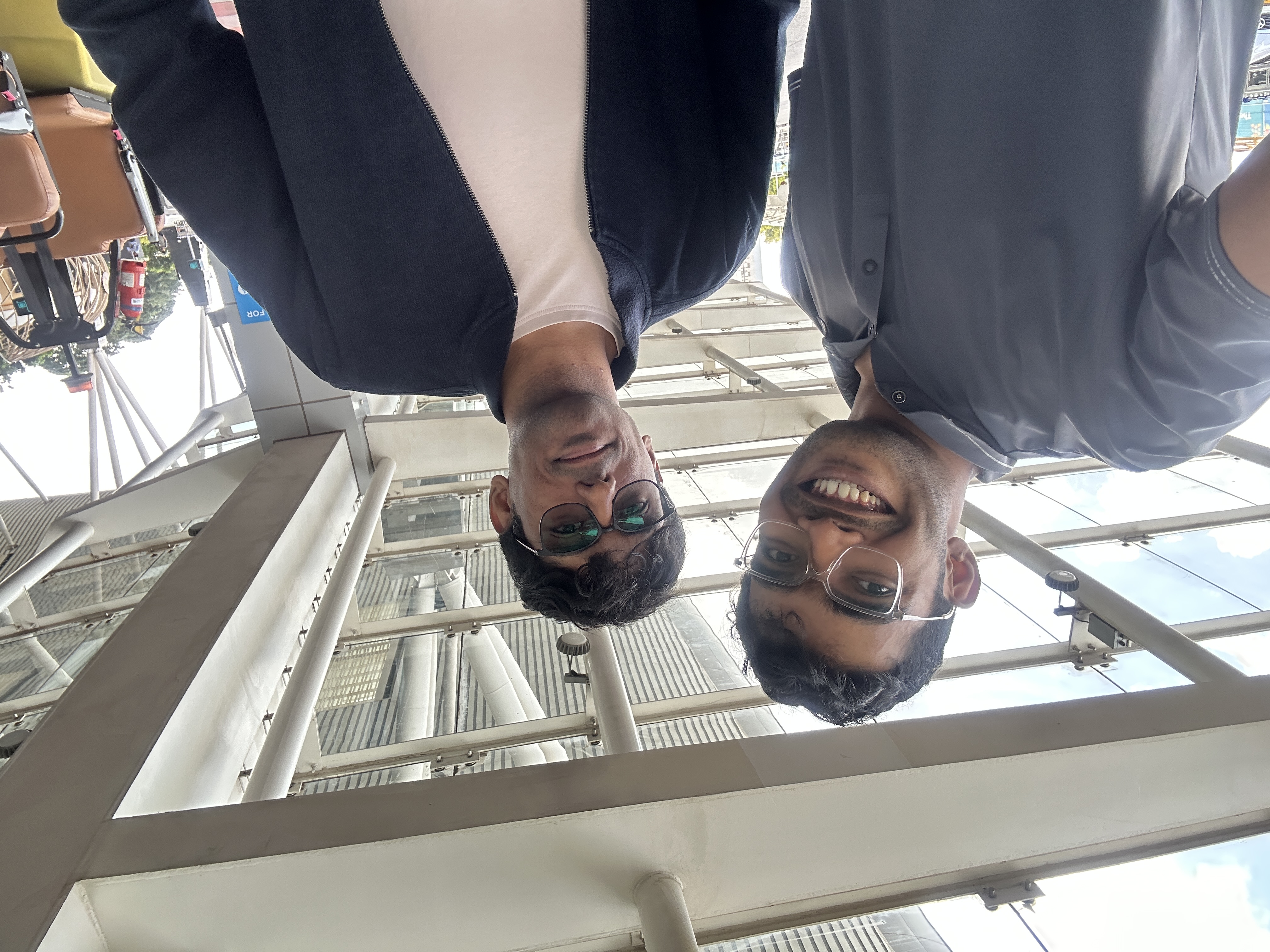
Spoiler alert: his name was Ishan Daga. He is building GolainGolaincompany · opens in a new tab, an industrial IoT company that works with factories.
Fifteen minutes later, he said he was leaving for the airport.
I had not even entered my room. I left my bag at reception and joined him for the ninety-minute ride. Then I travelled ninety minutes back alone.
Three hours for someone I had met minutes earlier. One of the best decisions of the trip.
The model is not the moat
“The moat is never going to be the model.”
Models will keep changing. If your business depends on ClaudeClaudetool · opens in a new tab remaining better than every other model, you are renting AnthropicAnthropiccompany · opens in a new tab’s advantage.
The defensible part is the harness: tools, context, instructions, permissions, review systems, and workflows that turn a model’s output into actual work.
I thought I had built a system for managing ClaudeClaudetool · opens in a new tab Code. I had really started building a harness. The better question is not which model wins. It is: if I replace the model tomorrow, does my system still work?
Expensive models should think
I was giving complete tasks to the most intelligent model and expecting it to do everything. Ishan described a better structure: use expensive intelligence to clarify intent and create the plan. Give the mechanical work to something faster and cheaper. Bring the result back for review.
“An employee at InfosysInfosyscompany · opens in a new tab does not have to think at the same level as an account manager at InfosysInfosyscompany · opens in a new tab. Same thing.”
The next ten clients
Then we moved from AI to Temporary PerspectiveTemporary Perspectiveventure · opens in a new tab: working-capital pressure, delayed salaries, senior people dragged into every project, and junior people we did not trust with complete ownership.
“The correct metric to chase is the next ten clients.”
That line was a slap. At our stage, beautiful dashboards and perfect utilization can wait. If the next client does not arrive, the business does not survive next month.
Distribution in India is still human
Ishan told me about a factory project delayed for six months. His engineer kept visiting the factory and working with its operators. One operator saw them showing up, knew two other factories with the same problem, and offered introductions.
One ₹20 lakh project became roughly ₹60 lakh of opportunity. The referral did not come from the founder or plant manager. It came from the person who had watched the team do the work.
The layer of mediocrity
I told him our strongest people kept doing both intelligent work and grunt work because we did not trust the layer below them.
“That layer of mediocrity is what you cannot afford.”
Someone may look cheap on a salary sheet. If they constantly consume the time of your strongest people, they are not cheap. Keep accepting that layer and it becomes the culture.
What I wrote down
- Stay fast.
- Stay lean.
- Don’t stop experimenting.
- Challenge the norm.
Bas.
On the way back, I wrote this for you fellas. Looks like the thing was worth the time for two of us now.
I hope I circle back to this blog during the hard times—when building gets difficult and I feel like giving up on things.
One of the best decisions I made on the trip.