Two things really matter to me as a founder: the differentiation between a cpu and a gpu, and making sure everyone on the team is working in the same direction.
In a team, everyone has a different role and everyone is trying to achieve something different. Everyone sees themselves as the main character of the story. But as an organization, the organization should be the main character and everyone should be playing a supporting role. That is how you raise a profit-making business.
This issue keeps happening: if a cinematographer takes the lead, he pushes the agency towards advertisements. If an operating officer takes the lead, he pushes towards corporate, because that is where you build solutions for scale. Is advertisement bad? Is corporate bad? Nothing is bad or good. Everything is subjective, and what matters is what brings revenue to the table.
As a CEO, the helpful move is to understand everyone's take and build around it in a way that balances every aspect. And the question to ask isn't "what could go right with this direction?" it is "what could go wrong?" like they say, murphy was a pessimist. Be a pessimist here. Find the loopholes, find the flaws in every idea, and build around them so your chances of failure reduce.
Now the cpu versus gpu part. A cpu can process one very complex mathematical problem. A gpu does 1+1, 1+1, 1+1, tiny calculations, a million times over. Brutally put: cpu is built for quality tasks, gpu is built for quantity tasks.
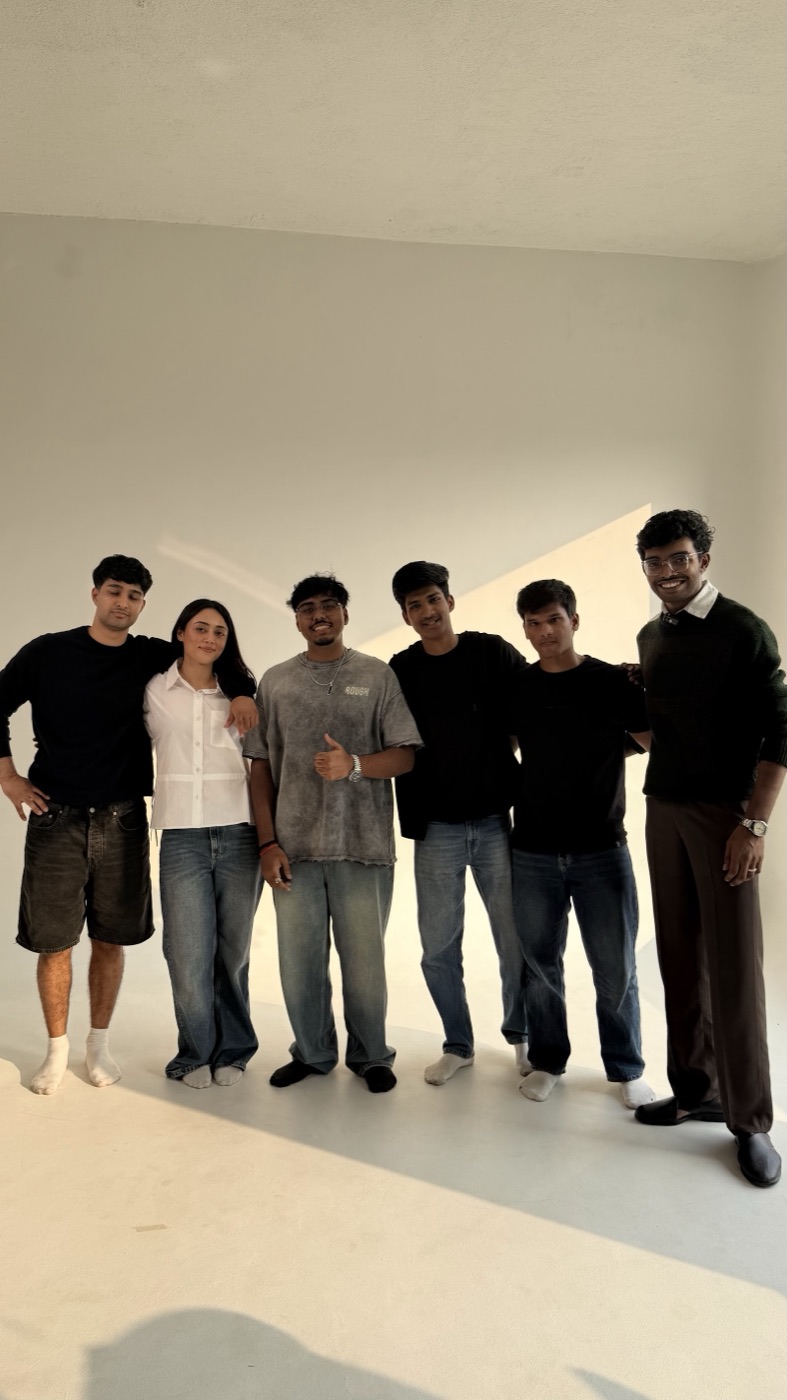
The manpower in your company maps the same way. Some people are there to build solutions for scale, they aim for quantity. Some are cpus, they optimize for quality. It is only a striking balance between these two that lets you thrive in a service industry. That is just my take as a young founder. Could be wrong. But that is what I genuinely think.
Everything in business is pretty much analytical except one factor, the most difficult one: people. And with people, what matters most is emotions.